

I'm a millennial, which means I have owned at least one tote bag with something hopeful about the planet printed on it, and I believed the tote bag. I believed the rainbows too. Every June the logos on my phone turned six colours, the casting got softer, the captions started to sound like a friend texting you, and I took it as a sign that something in the culture had moved. On the first of July the logos went back to normal. I never noticed, which I suspect was the idea.
Gen Z noticed. As far as I can tell, Gen Z notices everything. They read the comments before they read the post, and they can find a brand's tweet from 2014 faster than the brand's own social team. Where my generation saw a rainbow and felt included, they saw a rainbow and opened a new tab. They even have names for it: rainbow-washing in June, greenwashing on the packaging the rest of the year.
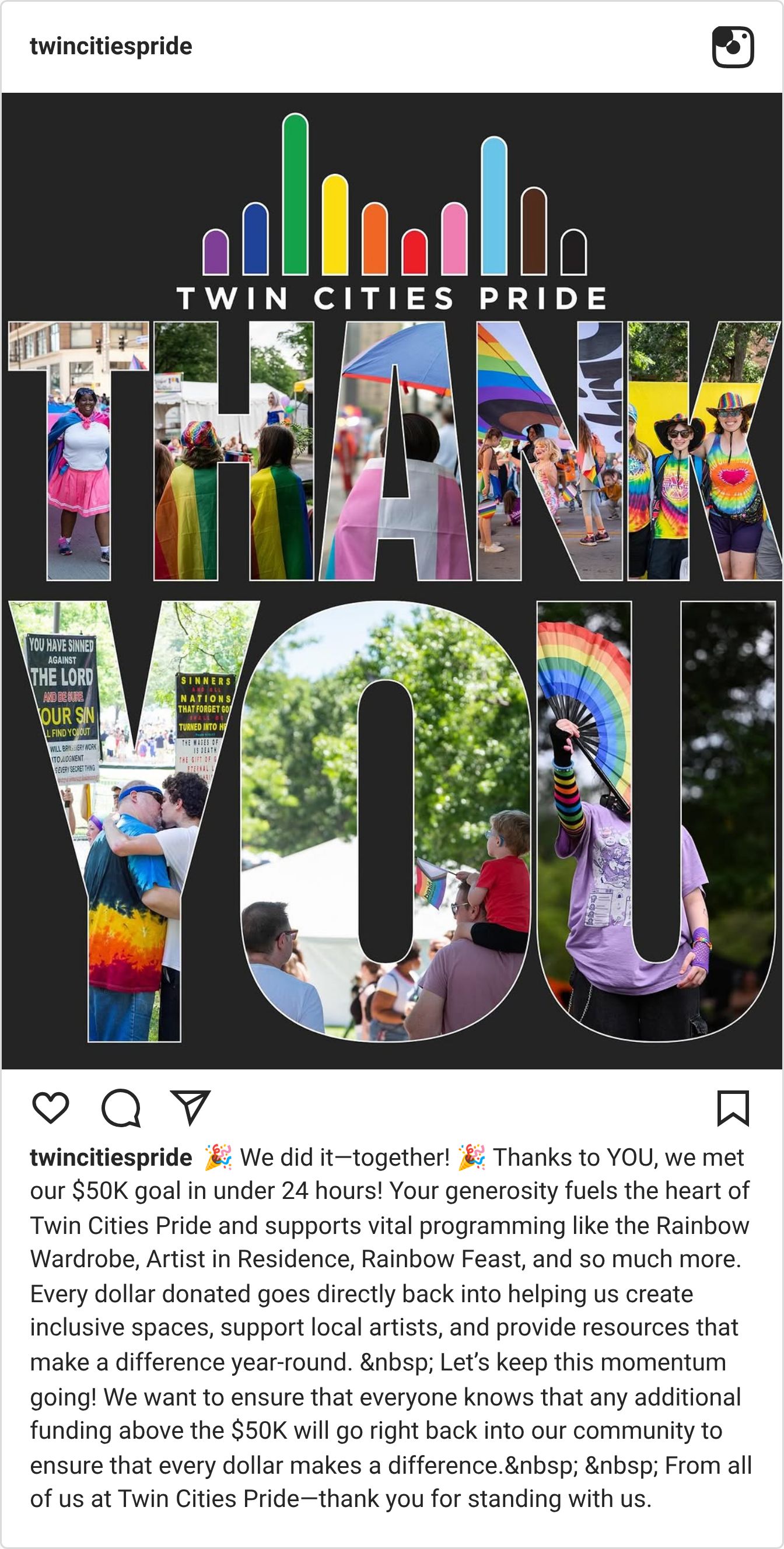
What finally made me open the tab myself was Target. In 2023, after a wave of conservative outrage, it pulled part of its Pride collection off the shelves, and that summer its sales fell for the first time in six years, with the company naming the backlash as one of the reasons. The next year the collection went to roughly half its stores, picked by past sales. Then in January 2025 Target rolled back its diversity programs, and Twin Cities Pride, the festival in Target's own hometown, turned down its $50,000 sponsorship after at least 18 years together. More than 1,400 people replaced the money in under 24 hours.
Target never quite lied. It kept the rainbow up for exactly as long as the rainbow was cheap, and after that I couldn't look at a campaign the same way. Every rainbow and every caption that opened with "we stand with" came with a question attached: are you doing this because everyone else is, or because you mean it? I got to that question late. Gen Z got there around the time of their first sponsored haul video, and they stopped waiting for brands to answer it years ago.
A childhood with sponsors
Their training started early. Gen Z is the first generation whose childhood came with sponsors: the unboxing video, the haul, the YouTuber who swore by a moisturiser until the contract ran out and a different moisturiser appeared on the same shelf, in the same light, with the same sincerity. The rules on disclosing paid posts had existed since 2009, but the Federal Trade Commission didn't write to influencers directly until April 2017, and one of the things its letters had to spell out was that "#sp" was not a clear way to tell people a post was an ad. Gen Z could have told them that. They had been finding the seam in a message for years, the way their grandparents looked for the price tag on a gift.
They also grew up building a self in public, and they set the bar for it themselves. This is the generation that kept a second, secret Instagram for the real version of their life and called it a finsta, then made a daily habit of BeReal, an app that gives you two minutes to post whatever your camera sees. They distrust the polished version of anything, their own included, and every old post can be dug up and screenshotted back into the present anyway. (Anyone who has had their 2016 tweets read back to them at a party knows the feeling.) In that world a value only counts if it's still there on the days nobody is watching, and they hold each other to that long before they get around to holding a company to it.
In fairness to my own generation, Gen Z didn't invent any of the checks that follow. Journalists, activists and a few very stubborn individuals built them, most of them older than the people now using them. What changed is that checking became a reflex. A job that used to need a newsroom now needs a screenshot, a search bar and a slow lunch break, and it happens in public, sometimes before the campaign has finished rolling out. Watch them do it often enough and the same few checks keep coming up. They call it checking the receipts.
The audit
1. The donations
A rainbow is free; a political donation is a decision. In June 2021 the newsletter Popular Information found that 25 companies celebrating Pride had given more than $10 million since 2019 to members of Congress with a zero rating from the Human Rights Campaign. All 25 held a perfect score on the same organisation's Corporate Equality Index, which didn't count political donations. CVS Health, one of them, had turned its Twitter avatar into a rainbow heart that month.
2. The archive
On June 1, 2020, L'Oréal Paris posted that speaking out is worth it. Munroe Bergdorf, the trans model the brand had dropped in 2017 for speaking out about racism, replied within hours to ask where that support had been when she needed it. The comments filled up, and within days L'Oréal had apologised and brought her onto its UK diversity board.
3. The payroll
The day after the black squares, Sharon Chuter of UOMA Beauty launched Pull Up or Shut Up, asking every brand that had posted solidarity to publish, within 72 hours, how many Black people it employed in corporate and leadership roles. Two years later, on International Women's Day 2022, the Gender Pay Gap Bot began quote-tweeting British companies' celebratory posts with their median pay gap. Plenty of those posts were quietly deleted.

Marketing material from Ryanair for International Women’s Day (Ryanair/LinkedIn)
4. The small print
In 2022 a Quartz investigation found H&M's Conscious scorecards showing a dress made with 20% less water when it had used 20% more. The lawsuit that followed was filed by a marketing student.
5. Who gets paid
At the end of August 2019 Dior released We Are the Land for Sauvage, a fragrance whose name is French for savage. It showed Johnny Depp walking through red-rock desert, intercut with Canku One Star, a Rosebud Sioux dancer, performing on a clifftop, and Dior promoted it as a journey into "the Native American soul." It was pulled within two days. The culture was the scenery, and the person being paid to be the face of the fragrance was Johnny Depp.
What the retreat confirmed
Target turned out to be early rather than unusual. By June 2025 the rainbows had thinned out everywhere. NYC Pride reported a $750,000 shortfall after Mastercard, Citi and PepsiCo stepped back, and some of the sponsors who kept paying asked not to have their names on anything. None of this surprised anyone who had been running the checks. The support hadn't been shallow so much as conditional, and conditional was what Gen Z had assumed all along.
My generation helped set this up. We laughed when Wendy's roasted strangers on Twitter, we called fast-food accounts iconic, and we spent a decade letting brands talk to us like friends. They got the personality and the jokes and, eventually, a seat in the group chat. They also got the group chat's rules, and the group chat has an excellent memory.
The dull documents
Gen Z stopped asking brands whether they mean it a while ago, since a brand will always give the flattering answer, and simply checks instead. The lazy word for that is cynicism, but a cynic believes nothing and doesn't bother looking. They look because they still think a company could mean it, which is the most demanding kind of hope there is.
The brands that come through the checking are rarely the loudest ones. They tend to be the ones whose dull documents match their beautiful ones: the donations, the payroll, the supplier list, the packaging. In Gen Z's terms, the campaign is the grid and the documents are the camera roll, and they will always ask to see the camera roll. When Yvon Chouinard gave Patagonia away in 2022, the line everyone shared was that the Earth was now its only shareholder. What made the line believable was the paperwork underneath it, which put the voting shares in a trust and the rest in a nonprofit set up to receive the company's profits.
A brand's activism isn't what it posts in June. It's whatever is still true about the company on the first of July.

