

From store entrances that test your physical fitness to retro technology reimagined as tiny accessories, this month’s findings focus on clever execution, nostalgia, and pure visual humor.
1. Tansanmagnesium: The Entrance Test (Seoul)
The climbing apparel brand Tansanmagnesium opened its new flagship store in Seoul with an entrance that directly tests its customers. Built into the facade is a massive climbing hold that acts as a physical barrier, forcing visitors to actually climb or hold onto the grip to enter the space.
It is a brilliant piece of experiential retail design that filters the audience instantly. Instead of using traditional signs or standard storefront glass, the brand turns the simple act of walking into a shop into an interactive statement, ensuring that true climbing enthusiasts feel right at home before even stepping inside.
2. Cromia Design: Edible Typography
Design studio Cromia Design has been experimenting with typography by crafting custom typefaces made entirely from food textures. Their portfolio features letters sculpted out of everything from gummy candies and cheese slices to pasta dough and rice grains, capturing realistic light reflections, squish, and organic imperfections.
The studio pushes typography into a tactile, sensory territory. It is a compelling exercise in material design, demonstrating how using organic, edible textures can instantly transform letterforms into playful, appetite-inducing visual assets.

3. The Tamagotchi Ring: Wearable Nostalgia
Bandai released a new miniature version of the iconic 90s virtual pet, re-engineered to fit on a ring. Despite its tiny size, the accessory retains the recognizable egg shape and pixel aesthetic of the original toy, turning a classic gadget into a wearable fashion piece.
This is a clever lesson in product sizing and nostalgia-driven hardware. By taking a device that used to live on a keychain or in a pocket and shrinking it down to ring size, it transforms a piece of retro tech into a subtle, functional conversation piece for everyday wear.
4. LEGO x PlayStation: The Brick-Built Console
LEGO announced an official collaboration with PlayStation to release a detailed, brick-built replica of the classic console, complete with a retro controller, memory card, and game disc. The set pays homage to the hardware that shaped modern gaming culture during the 90s.
The appeal lies in how well it bridges two massive collector markets. It takes a piece of smooth plastic hardware from tech history and translates it into LEGO’s signature modular language, offering a hands-on building process that celebrates the geometry and nostalgia of original gaming hardware.
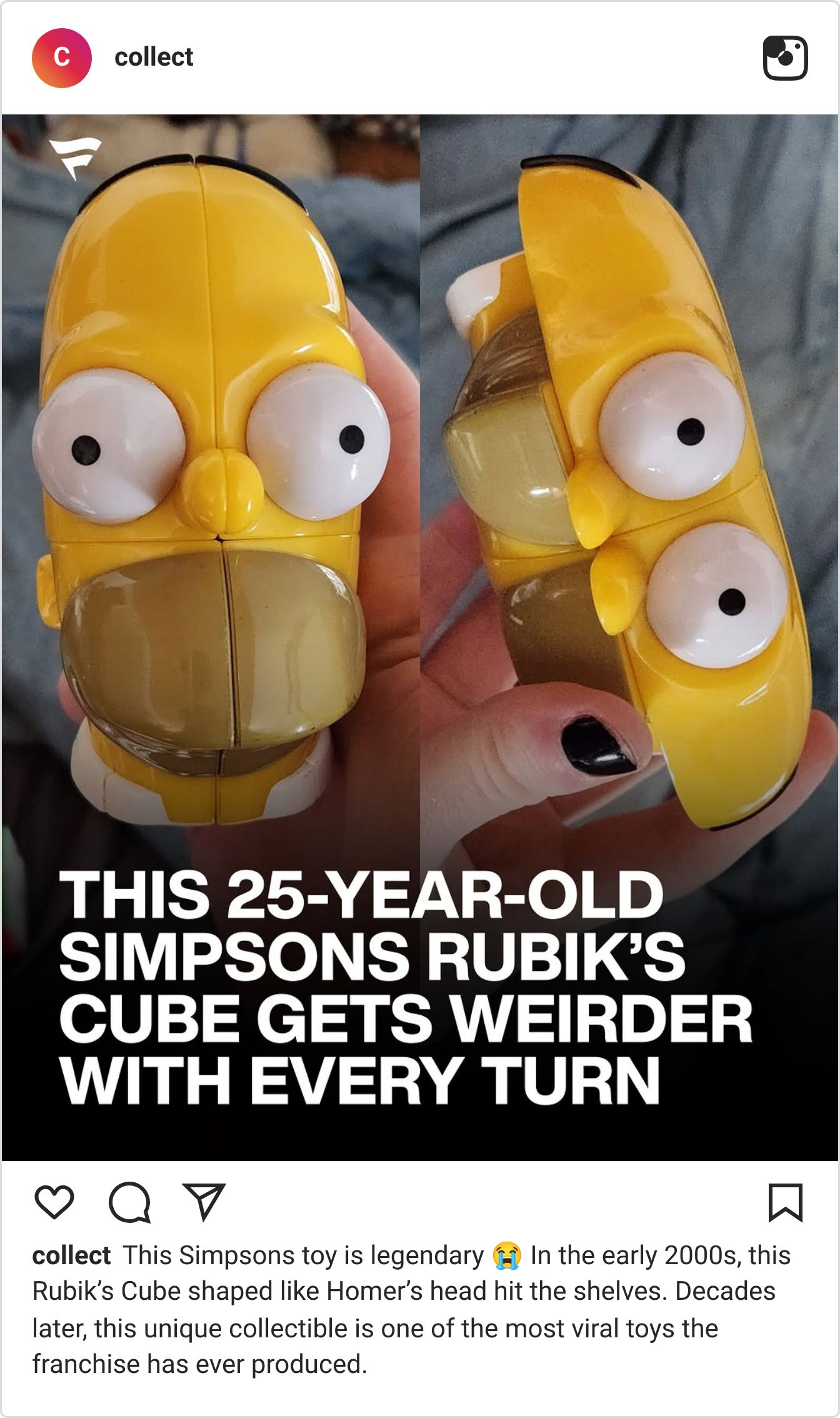
5. Homer Simpson Rubik’s Cube
A custom Rubik's Cube design has replaced the traditional square block with the 3D head of Homer Simpson. As you twist and solve the puzzle, Homer’s facial features shatter and distort into surreal, bizarre combinations until the puzzle is returned to its original form.
It is a fun, low-stakes piece of product humor that redesigns a classic mechanical puzzle. By swapping clean color grids for a famous cartoon silhouette, it turns a notoriously frustrating brain-teaser into an entertaining, distorted sculpture that sits somewhere between pop art and a toy.
6. Amber Skye Alcock: Painting the Bizarre
Artist Amber Skye Alcock has gained attention for her surreal oil paintings that depict bizarre, uncanny, and often humorous domestic scenes. Her work combines classical painting techniques with awkward, unexpected human behaviors and strange modern narratives.
Her portfolio stands out because it balances technical skill with weirdness. By rendering odd, uncomfortable moments with the rich depth and light of traditional fine art, she creates compelling visual stories that make you pause, zoom in, and question the context of the scene.
@amberskyealcock Tadaaa 🧌 This piece titled ‘The Thirteen Day’ is inspired by Theodore Gericault’s ‘Raft of the Medusa’ will be available as a very limited... See more
September was a reminder that the best design ideas often come from taking physical objects, nostalgia, and a bit of humor, and pushing them into unexpected places.
