

Most of what we found this August was made by hand in quantities that don't make sense. Jacob Hashimoto's canopy at SFMOMA is 75,000 individual kites. The Kyoto ceremony puts thousands of paper lanterns on the river and sends staff out to collect them again the same night.
1. Kyoto: the lantern built to sink
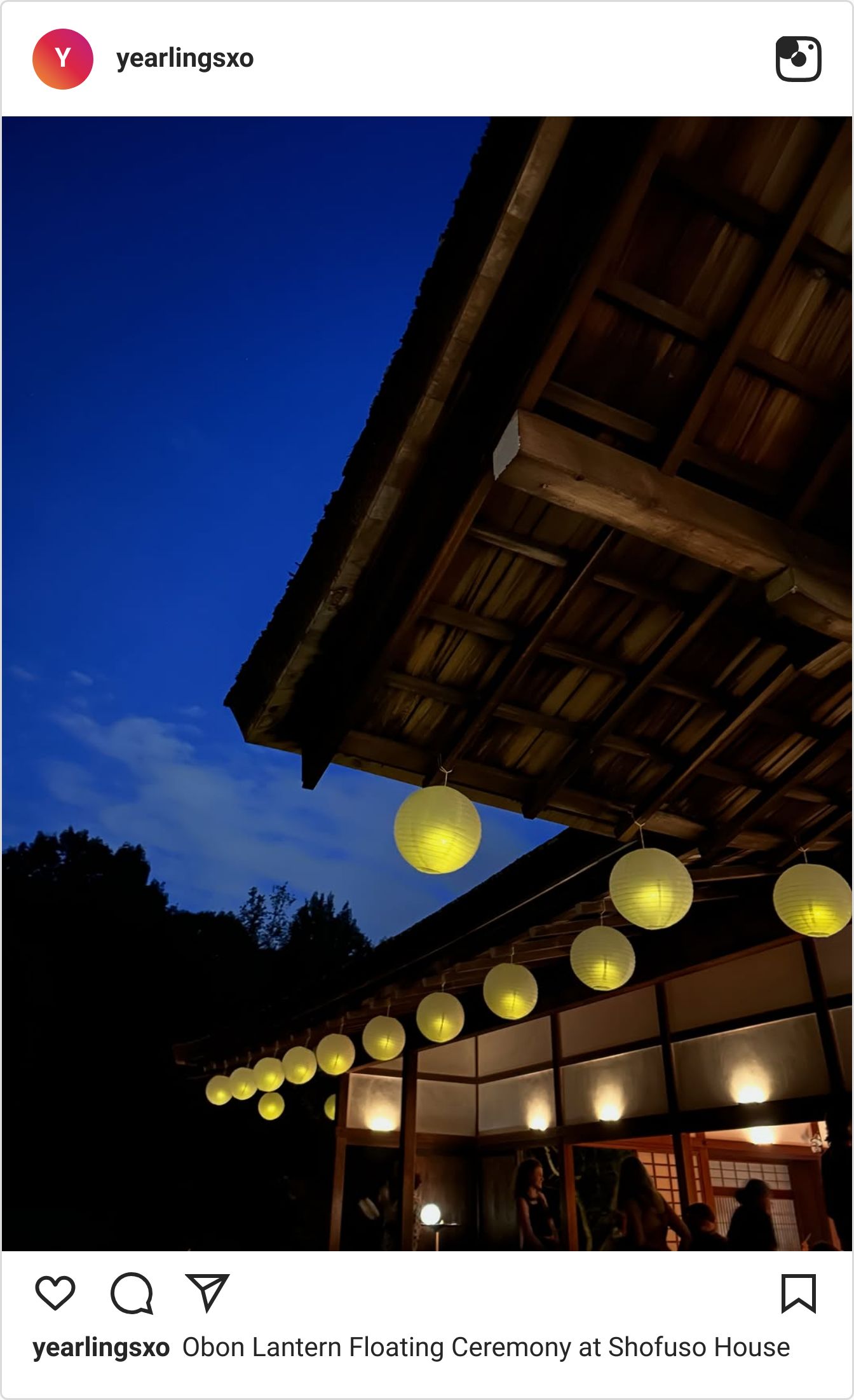
On 16 August, from seven in the evening, thousands of paper lanterns go onto the Katsura River from the east end of Togetsukyo Bridge while monks hold a memorial service on the bank at Nakanoshima Park. Anyone can register on the day, write a name on a lantern and put it on the water. It costs about a thousand yen. The ceremony started in 1949 to honour the war dead and has quietly become one of the events Kyoto is known for.
The detail that stays with you is administrative. Staff go out and collect the lanterns a few hours after release, to keep the river clean. So the object has to be beautiful enough to justify the making, cheap enough to produce in thousands, and seaworthy for a journey of maybe two hours before somebody fishes it out. Most things are designed to last. This one is designed to stop, on a schedule, and be quietly cleared away — which is a harder brief than it sounds and nobody watching would ever know.
Across the river the same night, the torii-shaped bonfire of Gozan no Okuribi burns on the mountain. You can see both at once.
2. Anish Kapoor at the Hayward Gallery
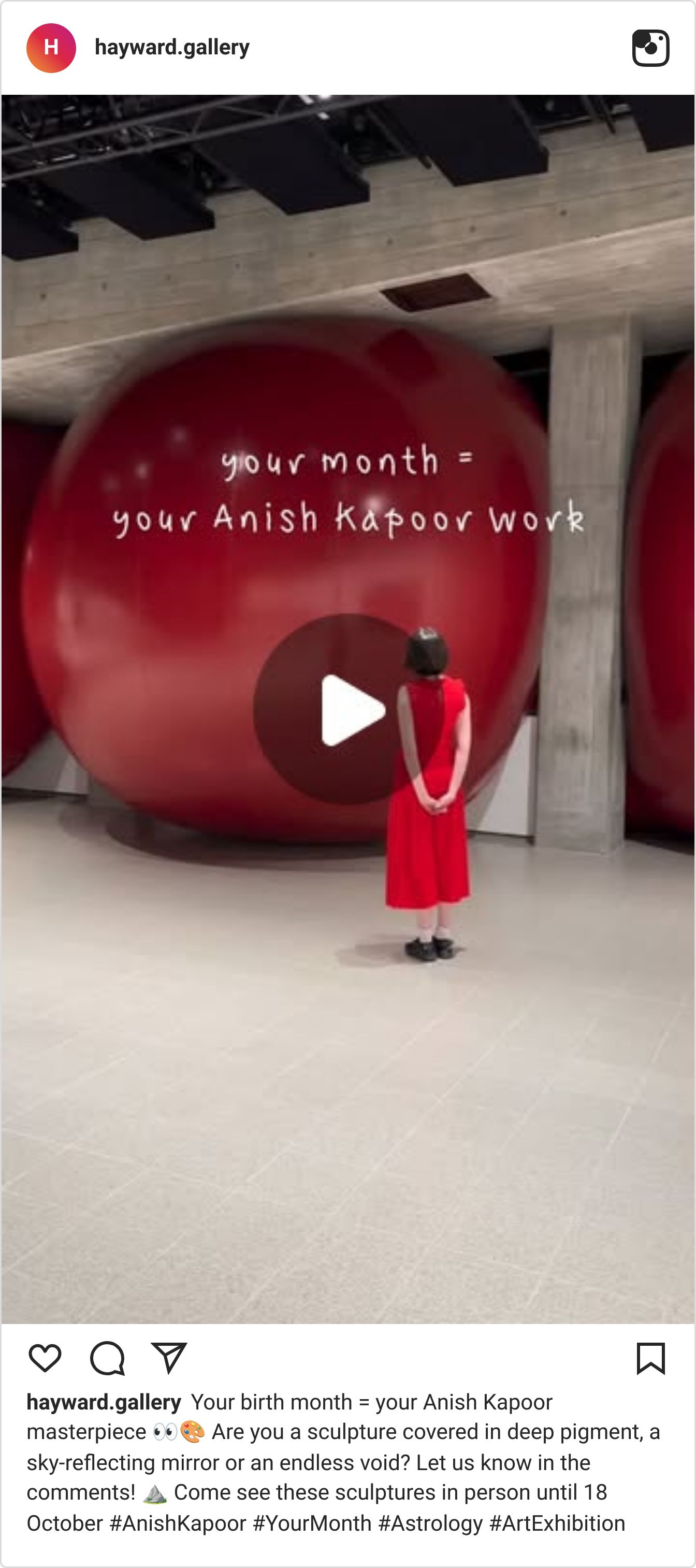
Taking over London’s landmark brutalist gallery throughout August, Anish Kapoor’s major solo exhibition fills raw concrete rooms with immersive, sensory-defying installations. The showcase ranges from void-like sculptures coated in light-absorbing Vantablack—which erase depth and appear like tears in physical space—to massive, crimson forms wedged tightly against heavy stone walls and mirror-polished steel that distorts the surrounding architecture. Standing before these works creates a visceral, disorienting friction between mass, light, and geometry.
The light-devouring black voids offer no visual feedback, while the heavy red forms press against the concrete, forcing visitors to feel the sheer scale and physical tension of the space. It is a striking reminder of how physical art can disrupt our perception of reality through pure, uncompromising material presence.
3. The Barbican is launching a furniture collection inspired by its iconic brutalist architecture
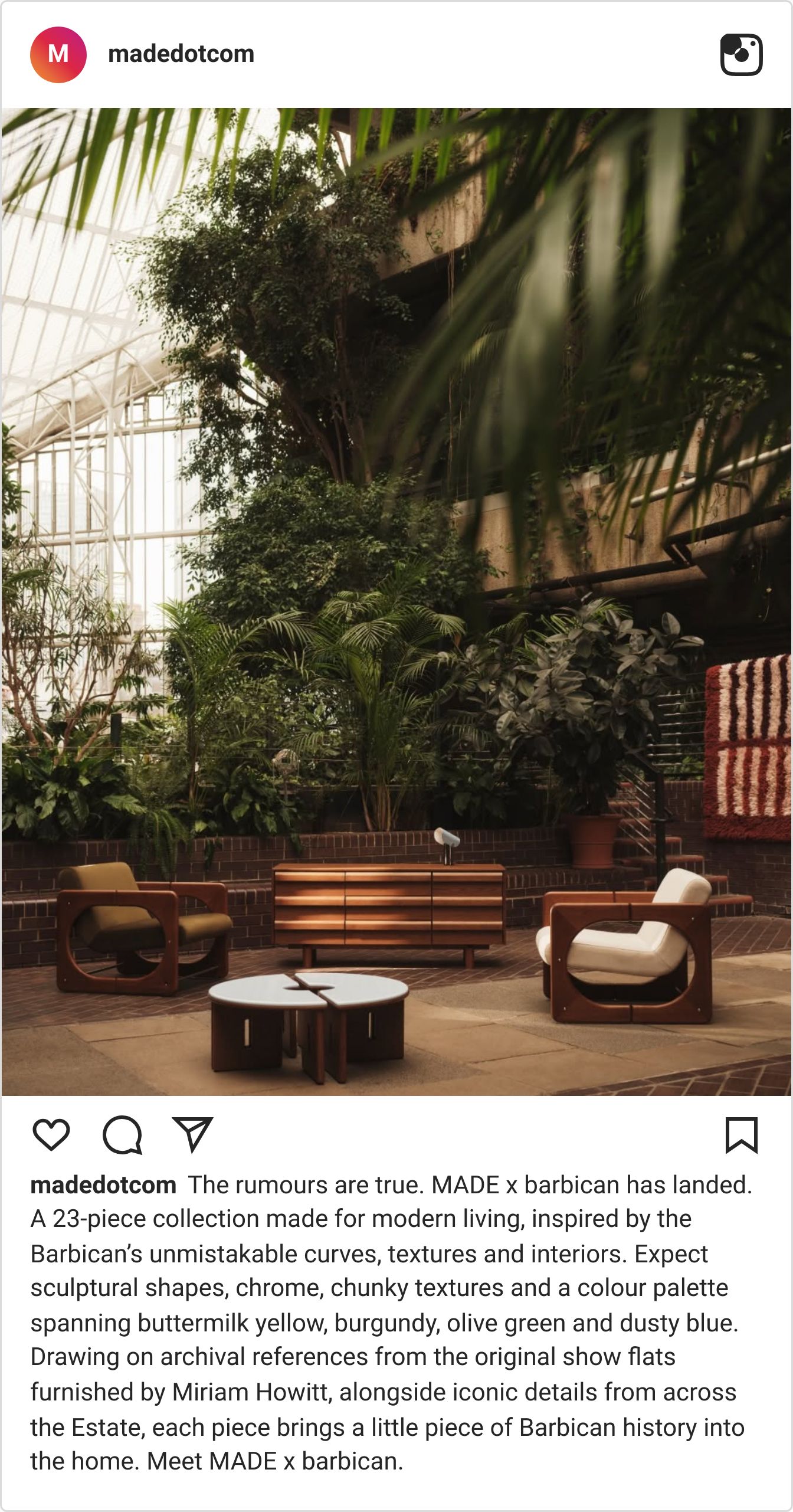
London’s iconic post-war brutalist estate collaborated with design brand MADE on a 23-piece furniture and lighting line that translates heavy concrete architecture into physical living spaces. Taking cues from the original 1960s show flats designed by Miriam Howitt, the collection trades sterile modern minimalism for warm mid-tone woods, pill-shaped cutouts, and structured geometric silhouettes.
The pieces carry an unmistakable tactile presence—from coffee tables shaped like the Barbican's sunken seating pods to heavy, tufted wall textiles and deep burgundy accent chairs that echo the estate’s structural pillars. It treats brutalism not as a cold architectural style, but as a rich, physical experience designed to bring weight, character, and texture back into the home.
4. Adidas x Arte Antwerp: Football Meets Graphic Design

Adidas joined forces with Antwerp-based design label Arte Antwerp for an August collection celebrating the intersection of football subculture, street art, and graphic design. Moving away from flashy synthetic performance gear, the collaboration strips back sportswear to focus on minimalist typography, architectural cuts, heavy-weight cotton jerseys, and subtle retro-inspired crests.
5. SFMOMA: Jacob Hashimoto’s Giant Arc
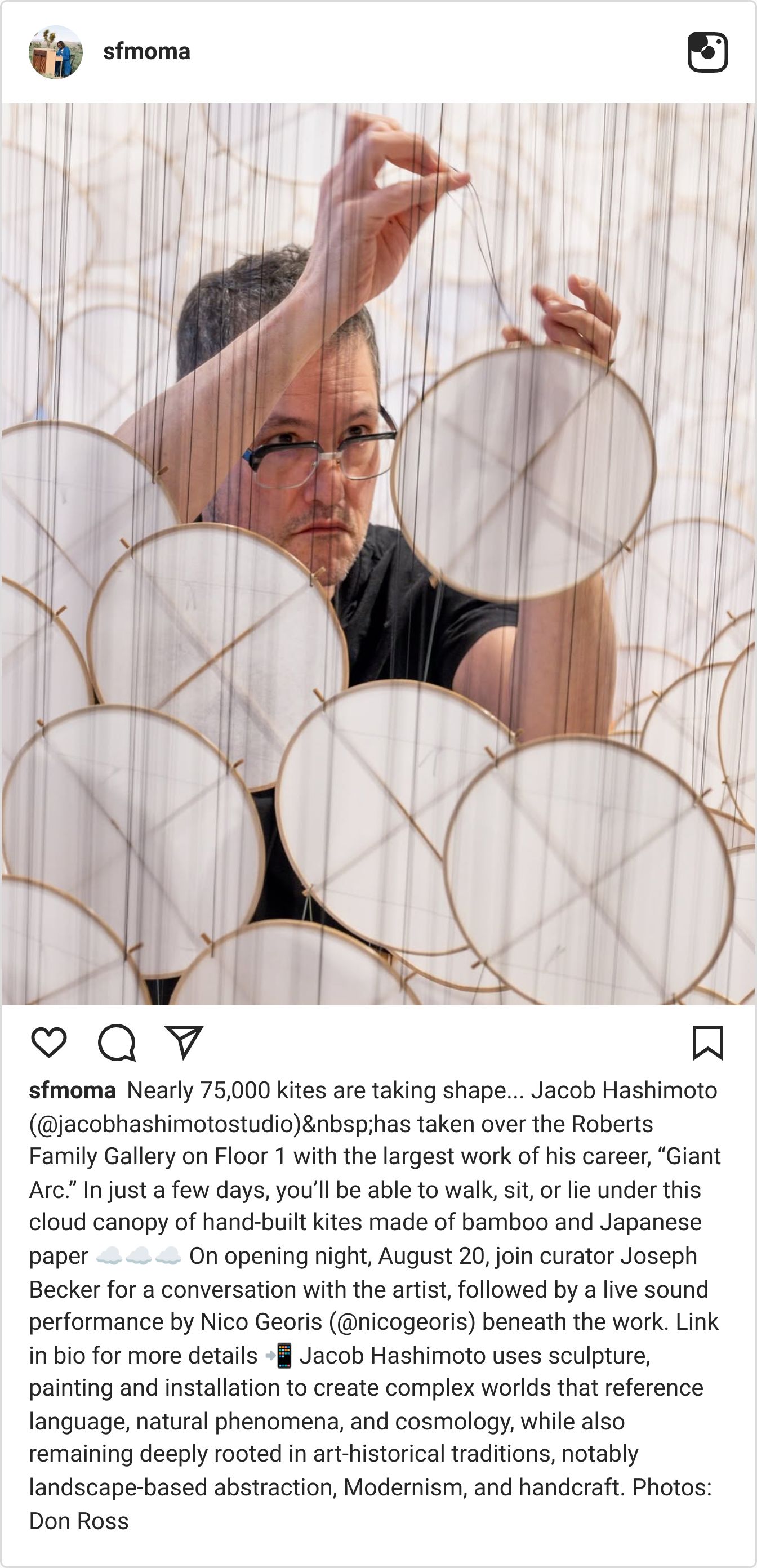
Filling SFMOMA’s double-height, street-facing Roberts Family Gallery, artist Jacob Hashimoto suspended Giant Arc—a monumental cloud canopy constructed from nearly 75,000 individual, hand-built kites. Crafted from thin bamboo frameworks and delicate Japanese paper, the modular components span the admission-free gallery floor-to-ceiling, creating an intricate landscape visible to passersby through massive glass windows along Howard Street.
Lying or walking beneath the suspended canopy offers a visceral study in handcraft scaled to architectural proportions. Natural light filtering through the gallery windows catches subtle printed motifs inspired by Northern California ecology—including the San Francisco dahlia, native checker lily, and Sonoran blue butterfly—casting a dynamic web of soft shadows across the stone floor. The artwork bypasses digital screens entirely, using the organic friction of paper, bamboo, and woven string to create a dense, weightless architecture built entirely by human hands.
What craft demands
At Lento we tend to say an interface with zero resistance leaves no impression. That holds off-screen too. A Vantablack void photographs as a flat black rectangle and only does its job when you're close enough to lose your depth perception, which is why nothing here survived being screenshotted for this list.
So we're saying go, on the assumption that most of you won't. The Hayward runs to October and the Barbican collection isn't going anywhere.
