

Taboo, guilt and a false sense of morality have driven public health communication about sex for a decade, and achieved almost nothing. The data out of Australia proves it: only 16% of Australians aged 16 to 49 have ever been tested for an STI, and only one in two have ever discussed sexual health with a healthcare provider. Syphilis and gonorrhea cases have more than doubled in the past decade.
Four Seasons read those numbers and decided the category needed a completely different conversation.
The brief was never about safe sex
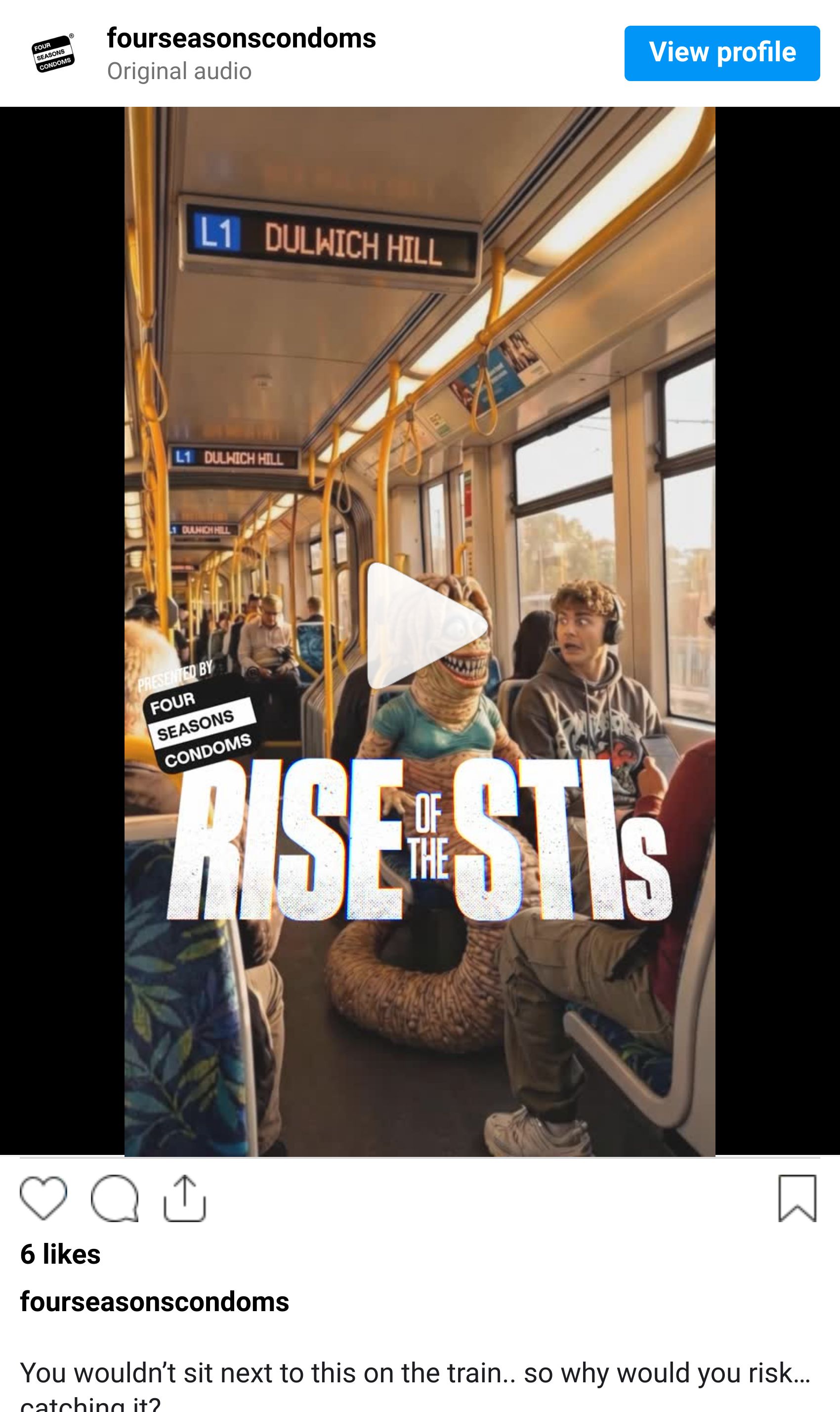
"The Rise of the STIs" opens with a familiar scene: a couple in bed, a man dismissing the need for a condom with "what's the worst that could happen?" Then a giant baby appears at the window and the film detonates into full cinematic chaos. Gonorrhea grabs the woman by its tentacles and rasps a line that lands its message in about three seconds. Syphilis and Chlamydia tear through the streets of Sydney. A deadpan teacher and his class watch the whole thing unfold on a classroom TV. Then it ends.
That classroom scene is the canniest beat in the film. It could have ended with the thriller sequence and walked away clean. Instead, that single detail signals educational intent without breaking tone, holds both Snapchat credibility and public health legitimacy at once, and does it without a second of earnest voice-over. No moralising or explanations. The absurdity carries the argument by itself.
Four Seasons and Emotive chose entertainment, humour, and spectacle as the entry point, and that decision is worth paying close attention to. The monsters were designed to be "weirdly entertaining and oddly likeable," with a deliberate clumsiness borrowed from early-90s animatronics: grotesque enough to register, charming enough to hold. The tension between those two things pulls an audience in before they've decided whether to keep watching.
There's also a cultural undercurrent worth noting. For some younger audiences, not using a condom has become a misplaced expression of trust or intimacy. The couple in the opening represent exactly that dynamic. That grounded insight is what makes the escalation land rather than feel random. The film earns its chaos.
AI didn't make the idea. It made the idea possible.
A decade ago, a condom brand couldn't make this film. Cinematic-scale monster sequences through Sydney streets simply weren't in the budget. That's the actual power behind what AI filmmaking enabled here. Emotive partnered with AiCandy Australia, whose directing duo Too Short for Modelling built the monster world through a hybrid model: AI-generated visual elements refined through traditional post-production craft. The result is a film that looks like it had money it didn't have.
This matters beyond the campaign itself. AI has begun to close the production gap between challenger brands and category leaders. A challenger brand's ambition no longer has to live inside the ceiling of its production budget. The creative idea can be the constraint, not the spend.
The campaign launched natively on Snapchat, built for feeds from the start rather than adapted from a broadcast format. Social extensions, meme-driven pieces, and reactive content are designed to evolve through audience interaction. Four Seasons built a fantasy world grounded in real facts, and then let it run.
The bigger question the work poses is for everyone still writing briefs on cold data and a lack of imagination: if entertainment is the only reliable entry point for Gen Z health communication, what does that mean for the brands, governments, and NGOs that haven't worked that out yet?
Four Seasons isn't the first brand to use humour to sell condoms. But they may be the first to use a monstrous baby to make the case for wearing one.
